Choosing the best supply chain software has become increasingly important as organizations face rising transportation costs, supply disruptions, demand volatility, and growing customer expectations.
Modern supply chains generate enormous amounts of data, but data alone doesn't improve performance. Businesses need software that transforms information into better decisions.
Today's supply chain software landscape goes far beyond traditional planning systems. The best platforms combine supply chain planning, mathematical optimization, simulation, analytics, and artificial intelligence.
In this guide, we compare the best supply chain software available today in the market. We'll explore what each platform does best, the features to look for, and key capabilities and limitations that can impact your choice. We’ll also look into what business value each tool can bring for your business and what practical problems it helps to solve.
BEST SUPPLY CHAIN PLANNING SOFTWARE: COMPARISON CRITERIA
In this guide, we compare five well-established supply chain software platforms. Rather than reviewing every vendor on the market, we check out solutions that were originally developed with a core focus on supply chain design, network optimization, and strategic planning. These are mature platforms with proven track records, established customer bases, and years of experience helping organizations solve complex challenges.
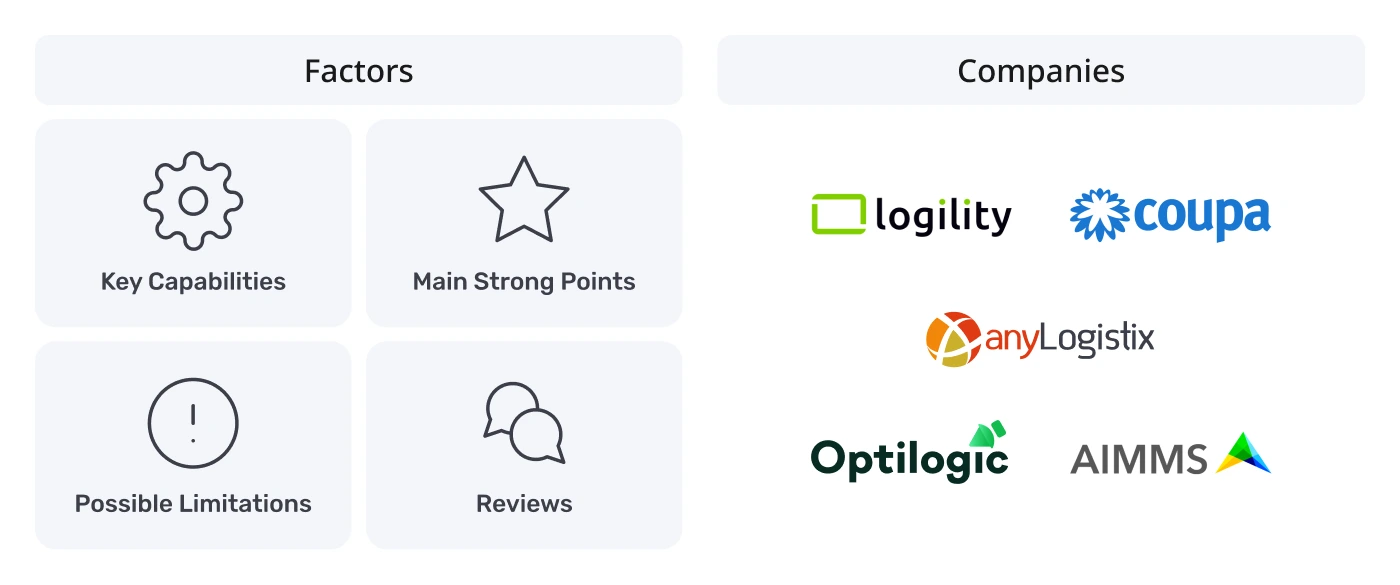
To create this best supply chain planning software comparison, we considered several factors that buyers typically evaluate:
Key capabilities
Main strong points
Possible limitations
Reviews (total number of reviews and combined ranking across main review platforms, such as Capterra, G2, and Gartner)
Best supply chain planning software comparison criteria
ANYLOGISTIX
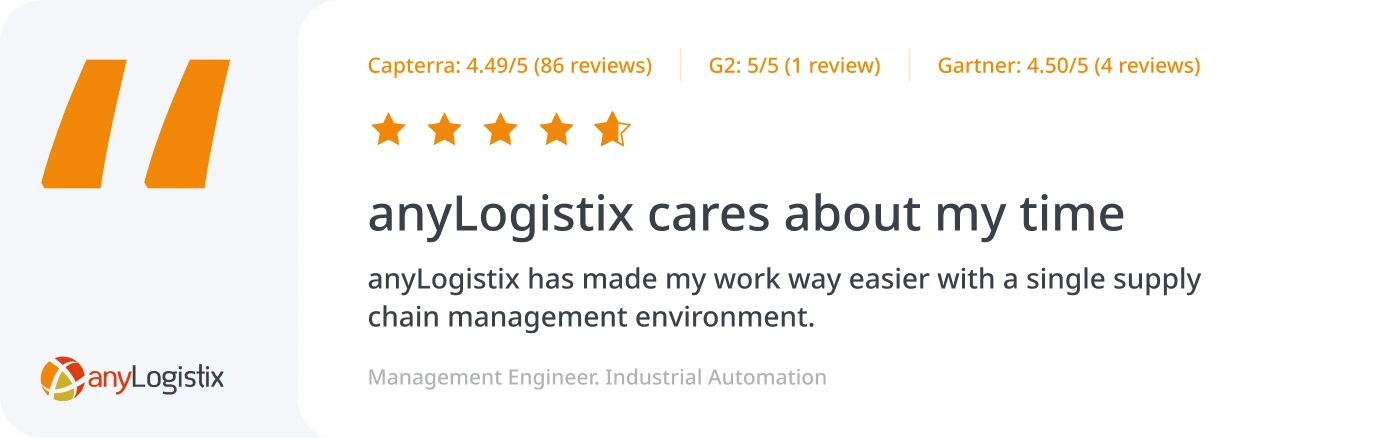
Combined rating across platforms: 4.67/5 based on 91 reviews
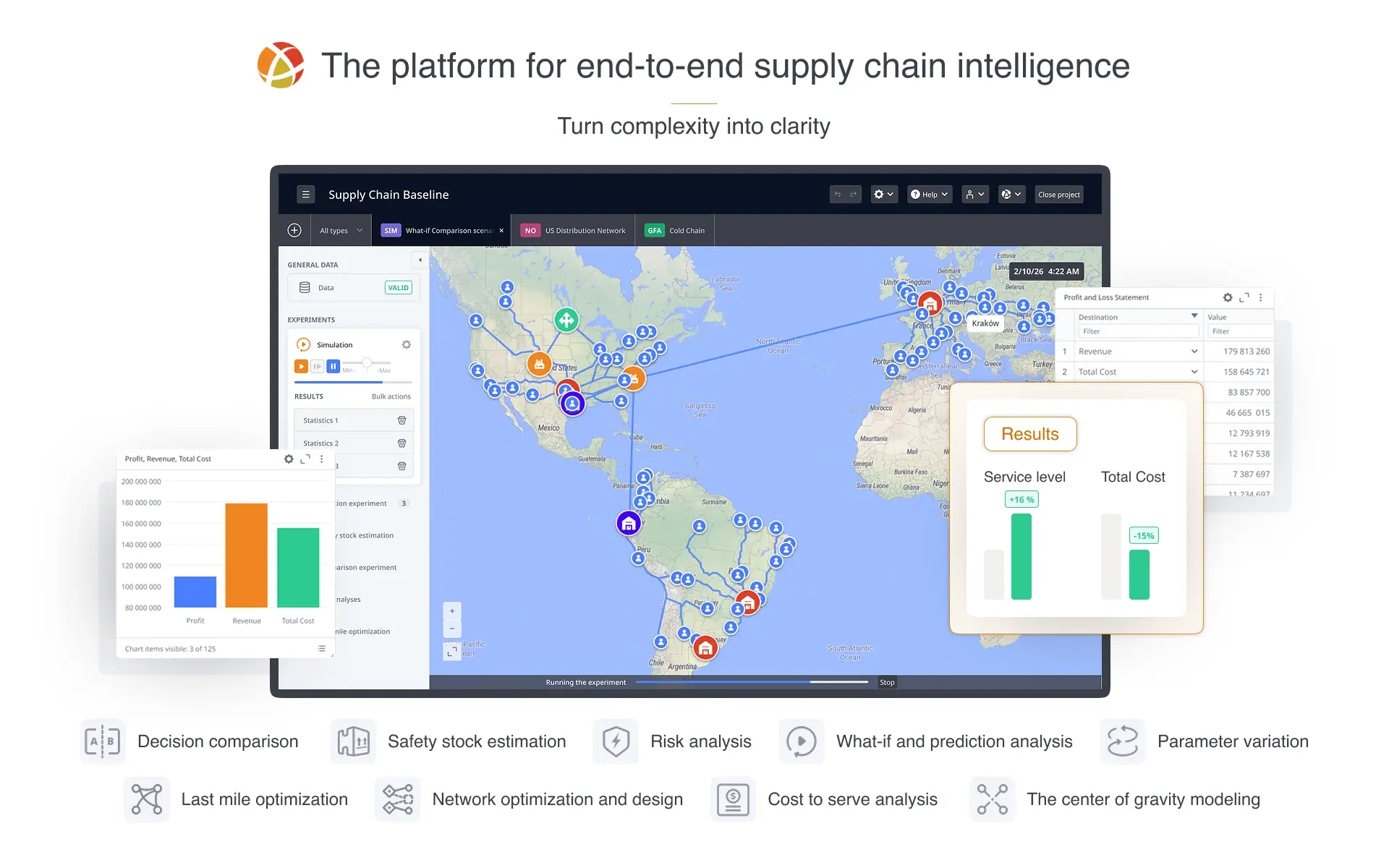
anyLogistix is the supply chain planning software designed to help organizations make both strategic and tactical decisions using a combination of optimization and simulation.
It enables companies to design, analyze, and continuously improve their supply chains by replicating real-world operations and testing scenarios in a risk-free environment.
Supply chain network optimization for designing cost-effective and resilient supply chain networks.
Greenfield analysis (considering real roads) to identify optimal locations for new facilities, warehouses, or distribution centers.
Cost to serve analysis to evaluate profitability across customers, products, regions, and distribution channels.
Supply chain simulation to test network performance under demand variability, disruptions, and operational uncertainty.
Supply chain digital twins for creating a virtual representation of the supply chain to support continuous optimization and scenario planning.
Risk analysis to assess supply chain resilience and evaluate the impact of disruptions.
Multi-echelon safety stock optimization to balance inventory costs while maintaining target service levels.
Last-mile optimization to improve delivery efficiency and reduce transportation costs.
Parameter variation and what-if analysis to compare alternative scenarios and understand the impact of changing business assumptions.
Visual analytics and GIS-based mapping to explore network performance through interactive dashboards and geographic visualization.
Integrations and extensibility to connect with ERP, WMS, TMS, and other enterprise systems for seamless data exchange.
anyLogistix strengths:
Uniquely combines optimization and simulation in one platform.
Serves as an end-to-end supply chain planning platform.
Strong support for strategic and tactical planning.
Flexible modeling for complex global supply chains.
Strong customer support, extensive documentation materials, and how-tos.
Free online edition to test the full capabilities of the software.
anyLogistix is a click away! Access anyLogistix Sandbox in your browser and explore the full power of the software, without any commitments!
Possible limitations:
Advanced modeling may require dedicated training.
Focused on decision support rather than day-to-day execution systems.
Reviews:
Users consistently highlight anyLogistix’s powerful optimization and simulation capabilities.
Capterra: 4.49/5
G2: 5/5
Gartner: 4.50/5
anyLogistix review
AIMMS
Combined rating across platforms: 4.30/5 based on 18 reviews
AIMMS offers two distinct products for supply chain optimization.
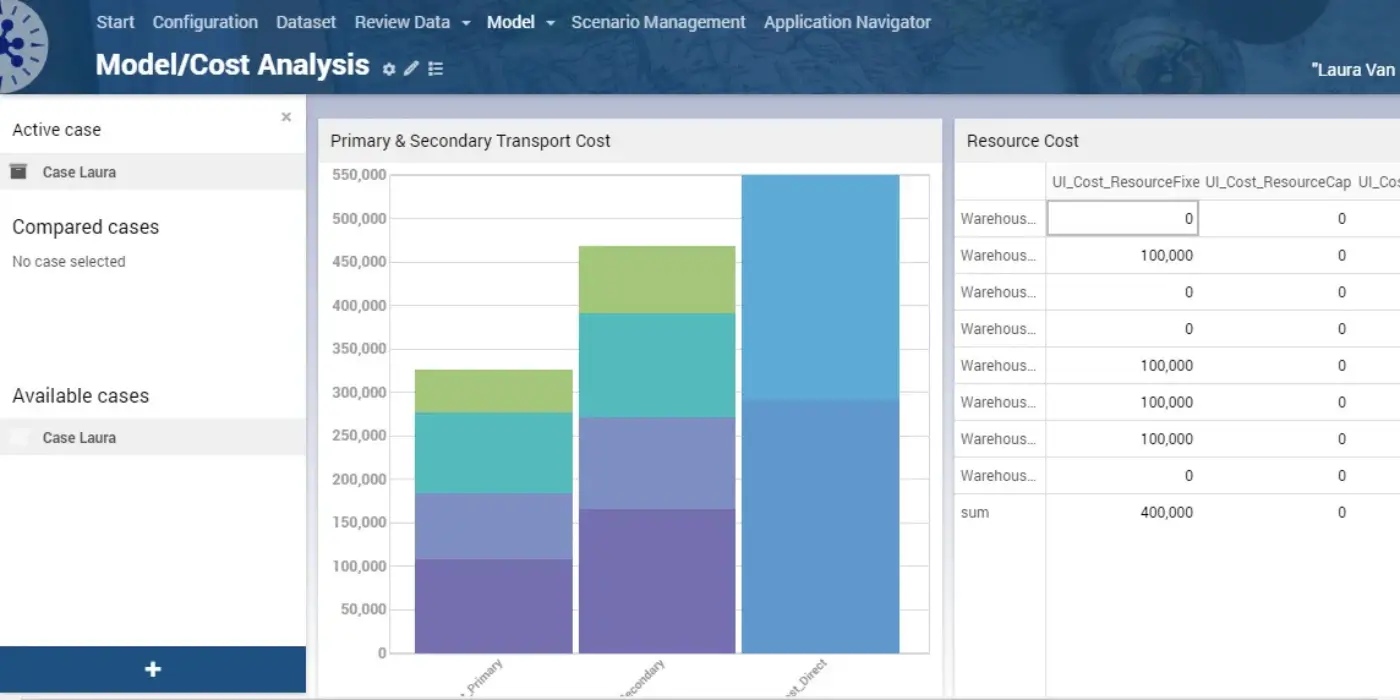
Optimization Tooling is a low-code development platform for building custom optimization applications. It is designed for organizations that want to develop proprietary decision-support tools using mathematical optimization and deploy them through AIMMS Cloud.
SC Navigator is a separate, ready-to-use application focused on supply chain network design and planning. It provides pre-built workflows for scenario analysis, network optimization, greenfield analysis, and inventory optimization.
Custom optimization model development using different mathematical programming techniques.
Low-code application development with integrated model, workflow, and user interface builders.
Support for multiple commercial optimization solvers, with the ability to switch between solvers.
Supply chain network design and scenario modeling through SC Navigator.
Greenfield analysis for facility location planning.
Inventory optimization and working capital analysis.
Multi-objective optimization balancing cost, service levels, carbon footprint, and other business KPIs.
Interactive dashboards, GIS-based maps, charts, and visual analytics.
AIMMS strengths:
Highly flexible platform for building custom optimization applications.
Strong mathematical optimization with support for multiple industry-leading solvers.
Low-code development environment.
Free AIMMS community license for personal study and use.
Possible limitations:
SC Navigator provides ready-made functionality for network design but is narrower in scope than a full end-to-end supply chain planning platform.
Optimization tooling typically requires operations research, optimization, and software development expertise to build and maintain custom applications.
Simulation capabilities are not supported.
The AIMMS portfolio consists of two products with different purposes, which can create confusion for businesses to identify the solution that best matches their requirements.
Desktop installation is required.
Reviews:
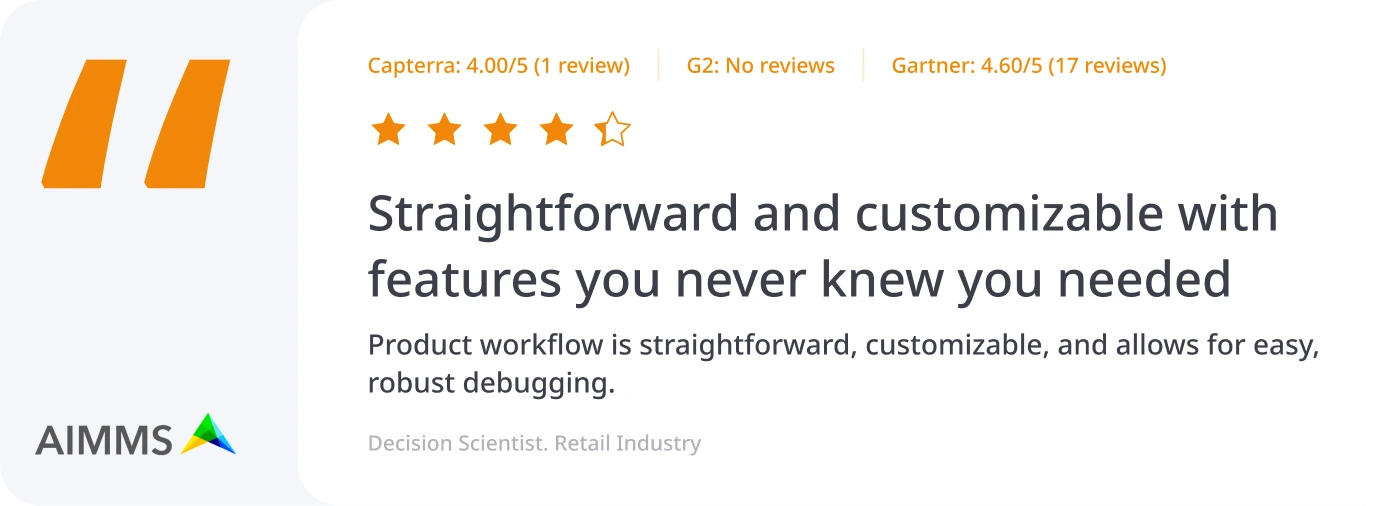
Users choose AIMMS for its optimization engine and flexibility. Reviewers also mention its cloud deployment and extensive integration capabilities.
Capterra: 4.00/5
G2: No reviews
Gartner: 4.60/5
AIMMS review
COSMIC FROG BY OPTILOGIC
Combined rating across platforms: 4.85/5 based on 29 reviews
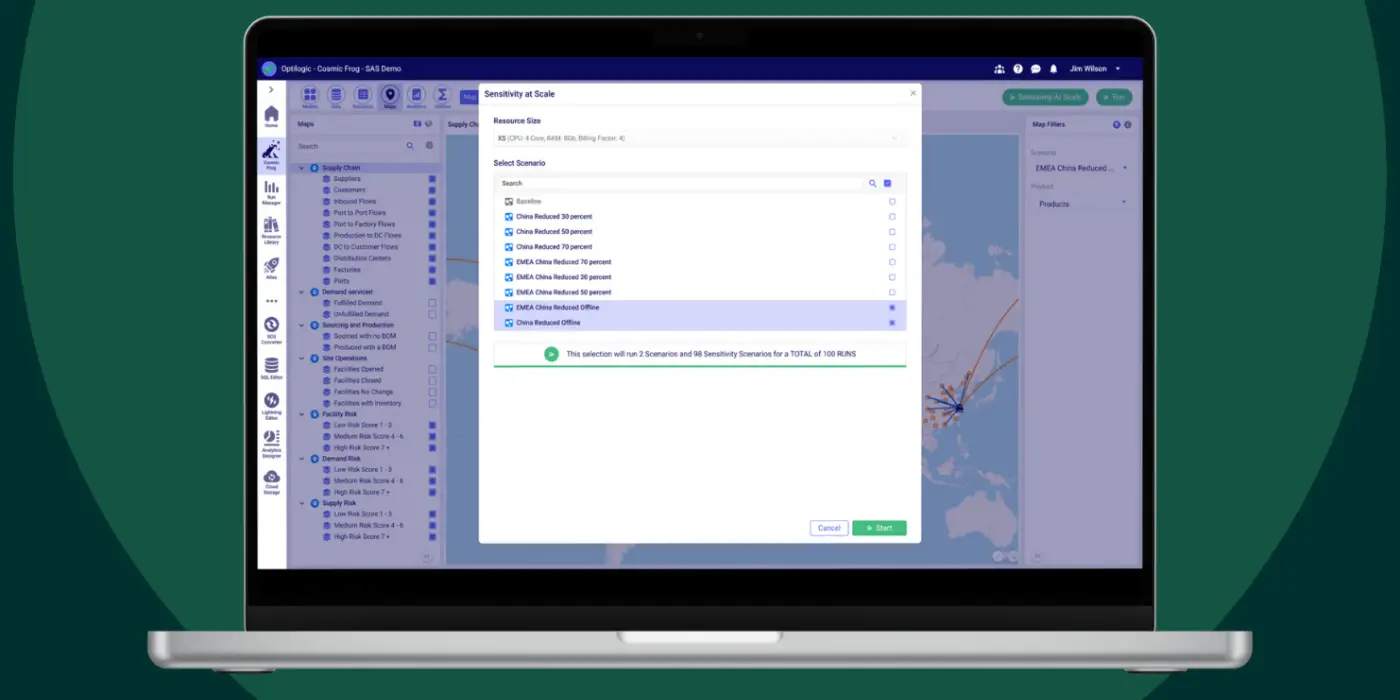
Optilogic Cosmic Frog is a cloud-native supply chain design and optimization platform that helps organizations model, optimize, and analyze complex supply chains. As part of the broader Optilogic Platform, Cosmic Frog combines optimization, AI-assisted modeling, and risk analysis. Recent additions to the platform, such as Ada (agentic AI) and DataStar (AI-powered data preparation), expand its capabilities further.
Supply chain network optimization for end-to-end network design and strategic planning.
AI-assisted scenario generation and natural language modeling through Leapfrog AI and the broader Optilogic AI ecosystem.
Risk analysis with automatic scenario risk ratings.
Greenfield analysis for facility location and network expansion planning.
Multi-objective optimization balancing cost, service levels, sustainability, and carbon footprint.
Transportation strategy optimization.
Inventory strategy and optimization.
Sensitivity analysis to identify the impact of changing business assumptions.
Cosmic Frog strengths:
Optimization, simulation, and risk analysis in a single cloud-native platform.
AI capabilities, including natural language model generation and automated data preparation.
Free Cosmic Frog account.
Free Coupa (ex. LLamasoft) project conversion.
Possible limitations:
Optilogic sells multiple products, including Cosmic Frog, Ada, and DataStar, which requires clients to understand how the different components fit together before selecting a solution. It can also include hidden additional costs.
AI-driven capabilities are a major differentiator, but organizations with strict security and compliance requirements may require stronger assurances around data protection and AI data handling.
Reviews:
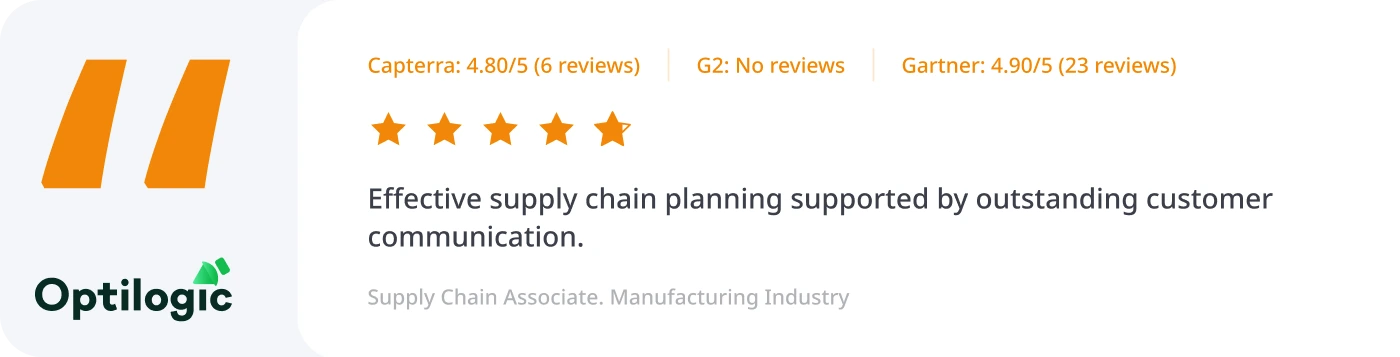
Users consistently praise Cosmic Frog for its ability to combine optimization, simulation, and risk analysis within a collaborative cloud platform.
Capterra: 4.80/5
G2: No reviews
Gartner: 4.90/5
Cosmic Frog review
LOGILITY
Combined rating across platforms: 4.49/5 based on 428 reviews
Logility is an AI-powered supply chain planning platform designed to help organizations improve demand forecasting, inventory optimization, and integrated business planning. Rather than focusing primarily on strategic network optimization, Logility emphasizes operational planning, AI-assisted decision-making, and end-to-end supply chain visibility.
Integrated Business Planning (IBP) and Sales & Operations Planning (S&OP).
Production and capacity planning.
Supplier collaboration and sourcing optimization.
Transportation and warehouse planning.
Data management with pre-built ERP connectors and enterprise integrations.
Logility strengths:
AI capabilities embedded throughout planning workflows.
Mature demand forecasting and inventory optimization functionality.
Integrated Business Planning (IBP), S&OP, and cross-functional collaboration.
Extensive integration capabilities with ERP and enterprise systems.
Possible limitations:
Primary focus is operational supply chain planning rather than strategic network optimization.
Network design and simulation capabilities are limited.
Advanced optimization is primarily applied to planning processes rather than large-scale network optimization studies.
Does not offer free accounts or free trials.
Desktop installation is required.
Reviews:
People highlight improvements in planning visibility and cross-functional collaboration after implementation.
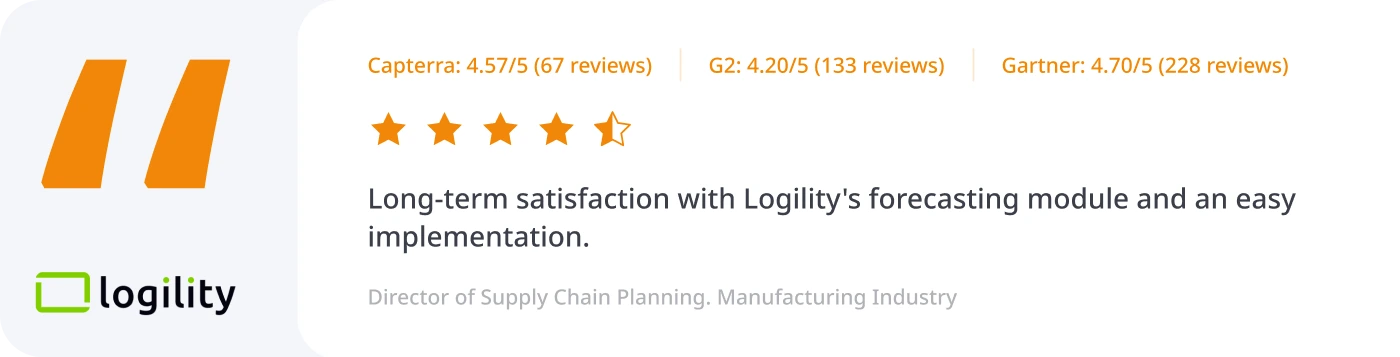
Capterra: 4.57/5
G2: 4.20/5
Gartner: 4.70/5
Logility review
COUPA SUPPLY CHAIN DESIGN (EX. LLAMASOFT)
Gartner rating: 4.90/5 based on 93 reviews
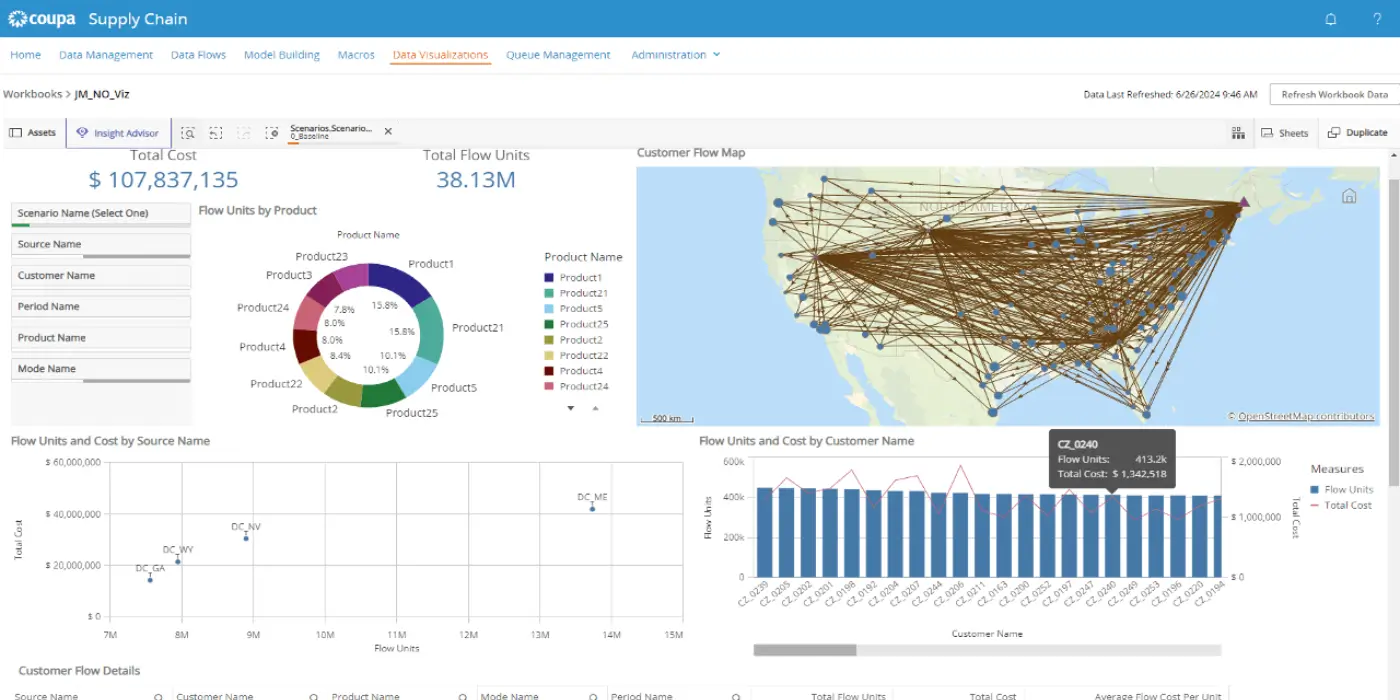
Coupa Supply Chain Design is a solution that helps organizations optimize their supply chain networks, evaluate sourcing strategies, and analyze the long-term impact. Originally developed as LLamasoft Supply Chain Guru, the platform became part of Coupa after the company's acquisition in 2020.
Today, the Supply Chain Design tool is one component of the broader Coupa ecosystem, which includes procurement, sourcing, supplier management, contract management, invoicing, spend analytics, and supply chain applications. For organizations already using Coupa in other departments, this integration may simplify connections between planning and procurement processes.
Strategic supply chain network design and optimization.
Facility location and Greenfield analysis.
Transportation network optimization and flow analysis.
Sourcing optimization and supplier strategy evaluation.
Cost to serve analysis across products, customers, and distribution channels.
Scenario planning and what-if analysis.
Risk and resilience analysis.
GIS-based network visualization and reporting.
Coupa strengths:
Strong optimization capabilities for strategic supply chain decisions.
Extensive scenario analysis and what-if modeling.
Well suited for large, global supply chains with complex distribution networks.
Benefits from integration with Coupa's broader Business Spend Management ecosystem.
Possible limitations:
Supply Chain Design is one module within the larger Coupa ecosystem, which may introduce additional complexity.
Organizations not already using Coupa's procurement or spend management solutions may see limited benefits from the broader platform integration.
Although the platform provides core network design capabilities, organizations prioritizing advanced simulation, modeling flexibility, and dedicated supply chain design functionality may find other platforms a better fit.
Does not offer free accounts. Impossible to touch the product before committing.
Desktop installation is required for model construction with limited team collaboration.
Reviews:
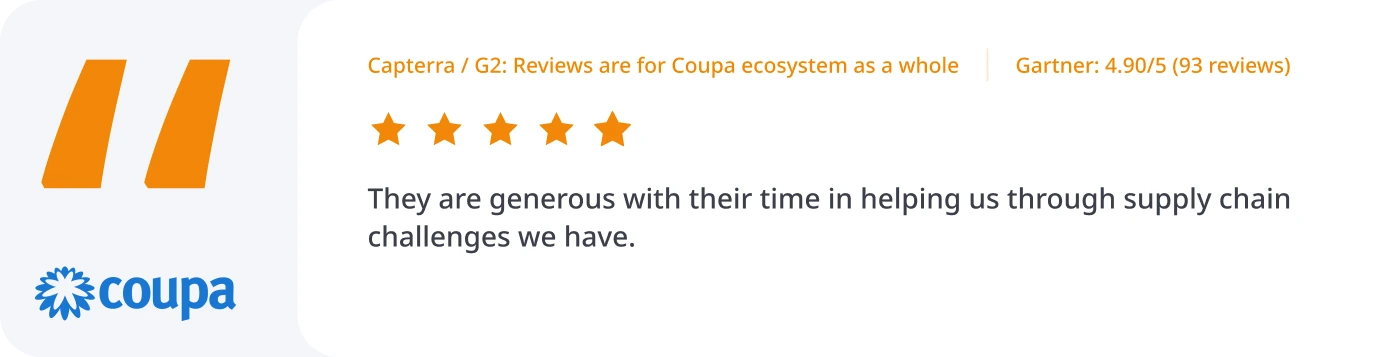
Because Supply Chain Design is part of the broader Coupa platform, it is difficult to find reviews that focus exclusively on this module. Many customer reviews discuss Coupa as a whole, including procurement, sourcing, spend management, invoicing, and supplier management. So going through those reviews, you should interpret overall platform ratings with caution.
Capterra: Reviews are for the Coupa ecosystem as a whole
G2: Reviews are for the Coupa ecosystem as a whole
Gartner: 4.90/5
Coupa review
CONCLUSIONS: WHAT IS THE BEST SUPPLY CHAIN PLANNING SOFTWARE?
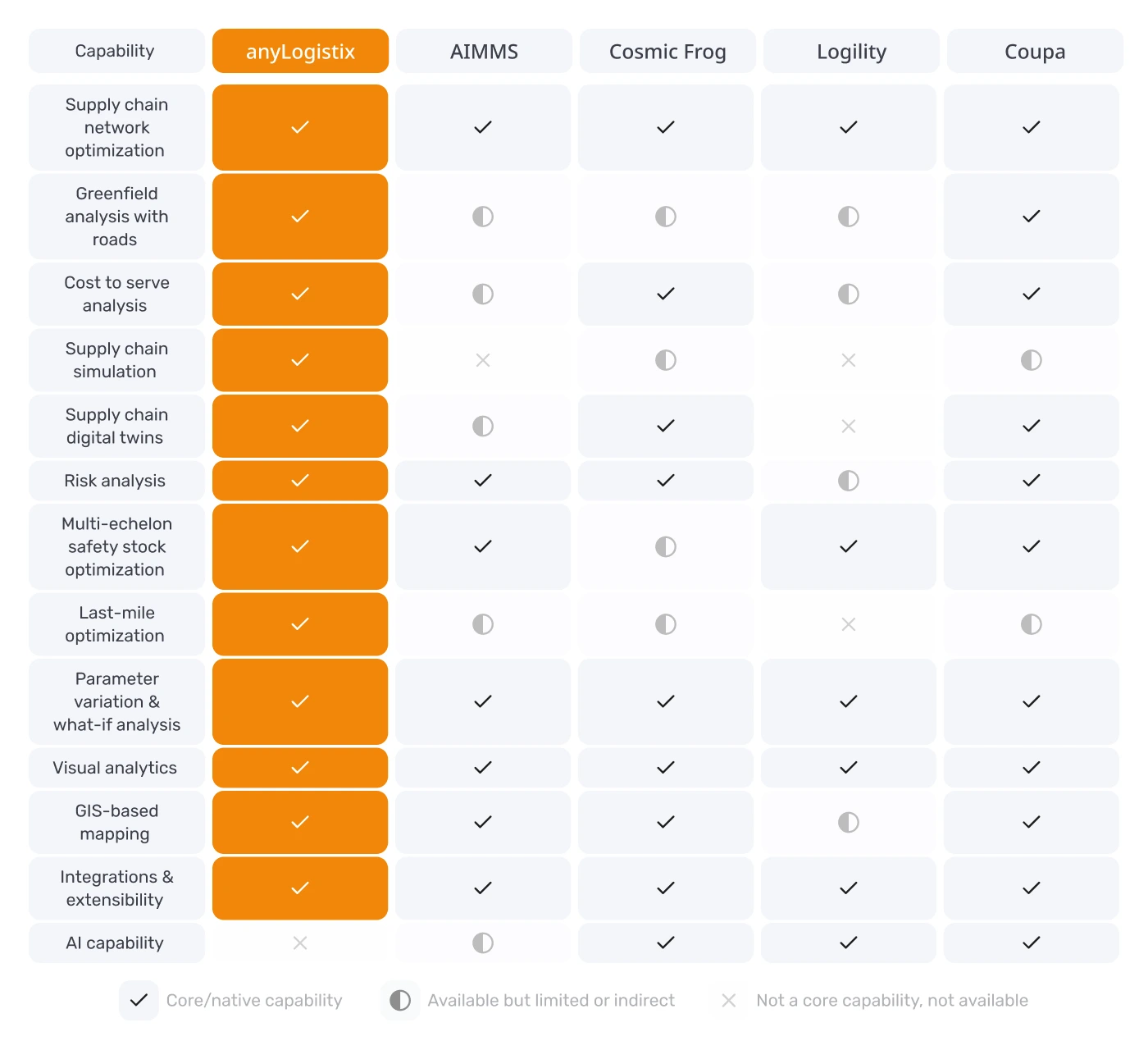
The supply chain software landscape is vast, with dozens of vendors offering solutions for planning, optimization, execution, and analytics. In this article, we focused on five well-established solutions. Below you can find the overview table with the capabilities of supply chain planning tools, compared in this blog.
Best supply chain planning software capabilities (click to enlarge)
Note: This comparison provides a high-level overview of capabilities based on publicly available product information as of 2026. A checkmark indicates that the capability is available but does not imply that features are identical across platforms. Some capabilities may require additional modules, products, integrations, or custom configuration.
Taken together, the comparison shows that all five platforms offer strong capabilities for supply chain planning and network optimization, but their areas of focus differ:
anyLogistix provides broad coverage across optimization, simulation, digital twins, risk, inventory, and last-mile use cases in one environment.
AIMMS stands out for customizable mathematical optimization.
Optilogic Cosmic Frog combines supply chain design with simulation, risk, and AI capabilities.
Logility has a stronger focus on AI-driven operational planning, forecasting, and inventory.
Coupa Supply Chain Design builds on its LLamasoft heritage with mature network design and optimization functionality within the much larger Coupa ecosystem.
These differences make it important to look beyond the number of features and consider how each capability is implemented and how well it matches your specific supply chain planning needs.
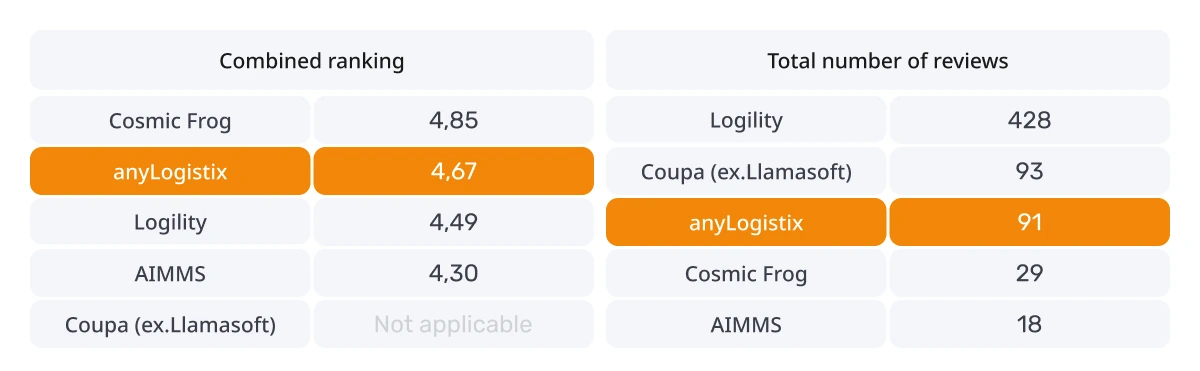
Below, you can also find the comparative table with rankings and a total number of reviews for each software.
Best supply chain planning software comparison
Of course, ratings tell only part of the story when trying to choose the best supply chain planning software. Customer reviews provide valuable insights into usability, implementation, and support, but they don't always reflect whether a platform is the best fit for a particular supply chain. Factors such as your network complexity, planning horizon, internal expertise, existing technology stack, and budget should all influence your decision. Ultimately, the best supply chain software is the one that aligns with your organization's goals.
Before making a final decision, we recommend requesting product demonstrations and testing real-world scenarios with your own data. To help you with this evaluation, we’ve prepared a step-by-step anyLogistix demo video showing how a real supply chain business case can be solved in our software.
At anyLogistix, we also believe that the best way to evaluate supply chain design software is to use it yourself. That's why we offer free online access to anyLogistix, allowing you to explore the platform's full capabilities without any commitment or time limit. Whether you're comparing vendors or learning more about supply chain design, you can build models, run scenarios, and experience the platform firsthand before making your decision. anyLogistix Sandbox is a few clicks away. Try it today!