
At anyLogistix, we believe better supply chain decisions start with models that accurately reflect how businesses work in the real world. Our latest two releases, 3.4.3 and 3.4.4, focus on making supply chain modeling more realistic and faster, improving result analysis, and enhancing performance across the platform.
These releases deliver practical improvements that simplify everyday modeling and help you analyze optimization results more effectively. Let's discover these in detail.
Contents:
We continue to improve the side-by-side results comparison introduced in version 3.4.1.
The updated Results comparison dialog now features a Data standardization part that allows you to define standardized distance, product, financial, and time units across all compared results. This ensures consistent metrics, making it easier to accurately compare optimization experiments.
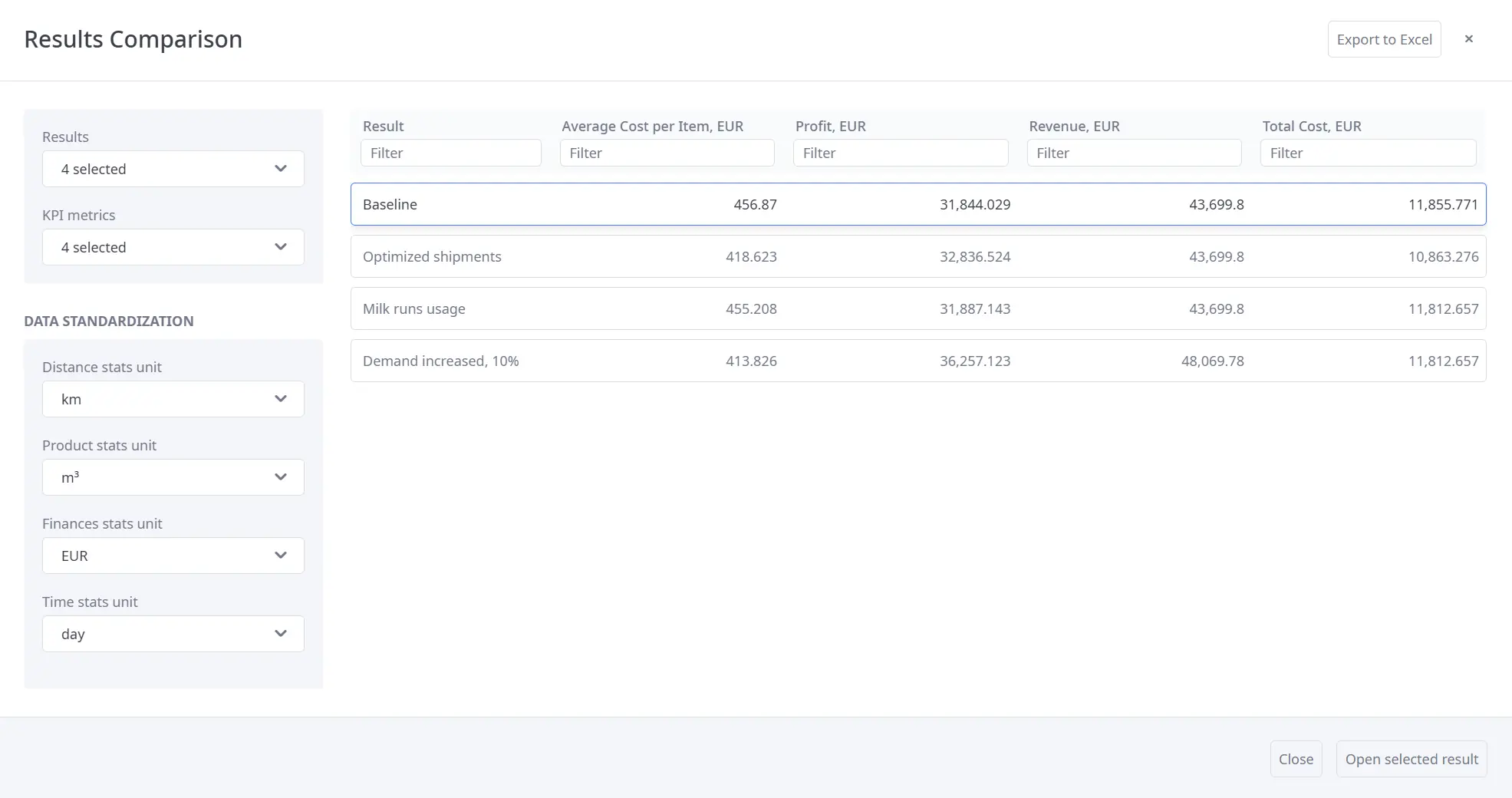
The updated Results comparison dialog (click to enlarge)
Supply chain data doesn't always exist in the format required for optimization experiments. Many organizations track demand as a total quantity for a month, quarter, or another planning period, rather than focusing on detailed historical or periodic numbers.
With the new Total demand type in the Demand input table for analytical optimization scenarios, you can now work directly with planning-period totals, without first transforming your input data.
This means faster model preparation, less manual data preprocessing, and a workflow that better matches real business data.
Instead of adapting your data to the software, anyLogistix lets you model demand much closer to the way it exists in your organization.
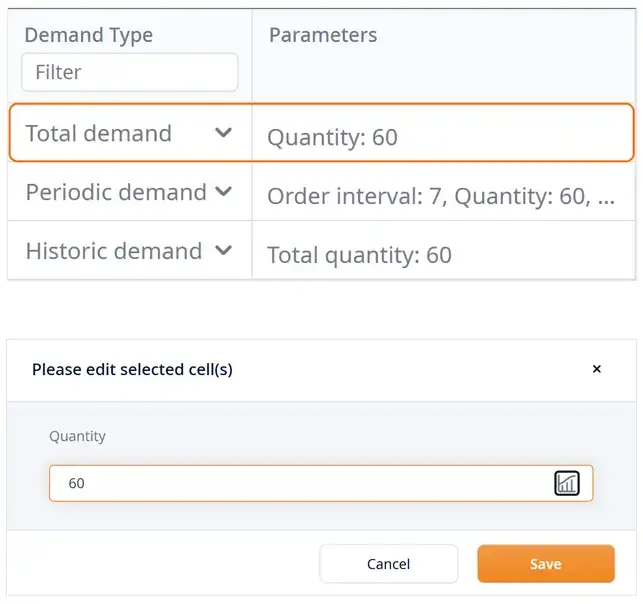
The new Total demand type for analytical optimization scenarios (click to enlarge)
Transportation pricing is rarely based on a single variable. Real tariffs often combine shipment size, travel distance, fixed trip costs, and delivery zones.
The latest releases introduce two new transportation cost calculation methods that better reflect these real-world pricing structures.
This new method allows transportation costs to include three independent components:
Instead of choosing between product-based or distance-based pricing, you can now combine both within a single transportation policy while also defining separate rules for different distance ranges.
This makes it much easier to model realistic carrier tariffs where fixed vehicle costs and distance-related charges are calculated independently.
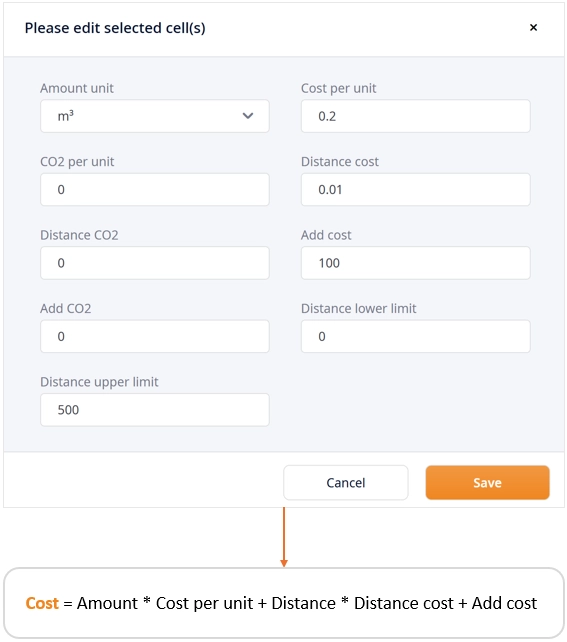
Set up distance-based product transportation costs (click to enlarge)
The second addition extends the existing fixed delivery cost logic. Now, different distance ranges can use different fixed delivery charges.
This is particularly useful for transportation networks where pricing depends on delivery zones or tariff intervals. For example, when local deliveries follow one pricing structure while longer routes use another.
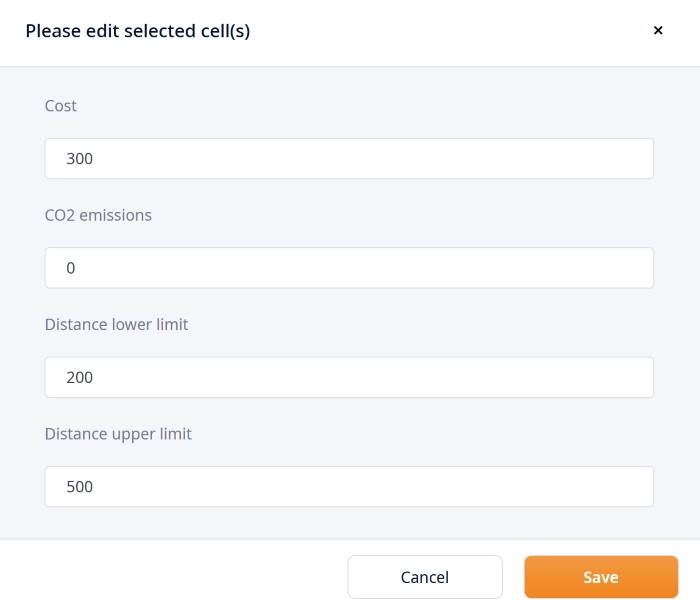
Set up fixed delivery costs within a distance range (click to enlarge)
Understanding optimization output is just as important as generating it.
Recent improvements include:
The latest releases also introduce several enhancements that improve modeling flexibility:
Versions 3.4.3 and 3.4.4 also include numerous performance and scalability improvements designed to make working with larger models smoother.
Highlights include:
Together, versions 3.4.3 and 3.4.4 continue our focus on making anyLogistix more practical for real-world supply chain design and optimization.
More flexible demand and transportation cost modeling, improved analysis tools, and stronger platform performance help you build models faster, represent real business constraints more accurately, and make supply chain decisions with greater confidence.
For a complete list of changes, see the release notes.
Ready to explore new capabilities? Download anyLogistix and start optimizing your supply chain with the latest innovations. Want to always be the first one to try updates? Access anyLogistix Sandbox, where all new features appear before official releases.